
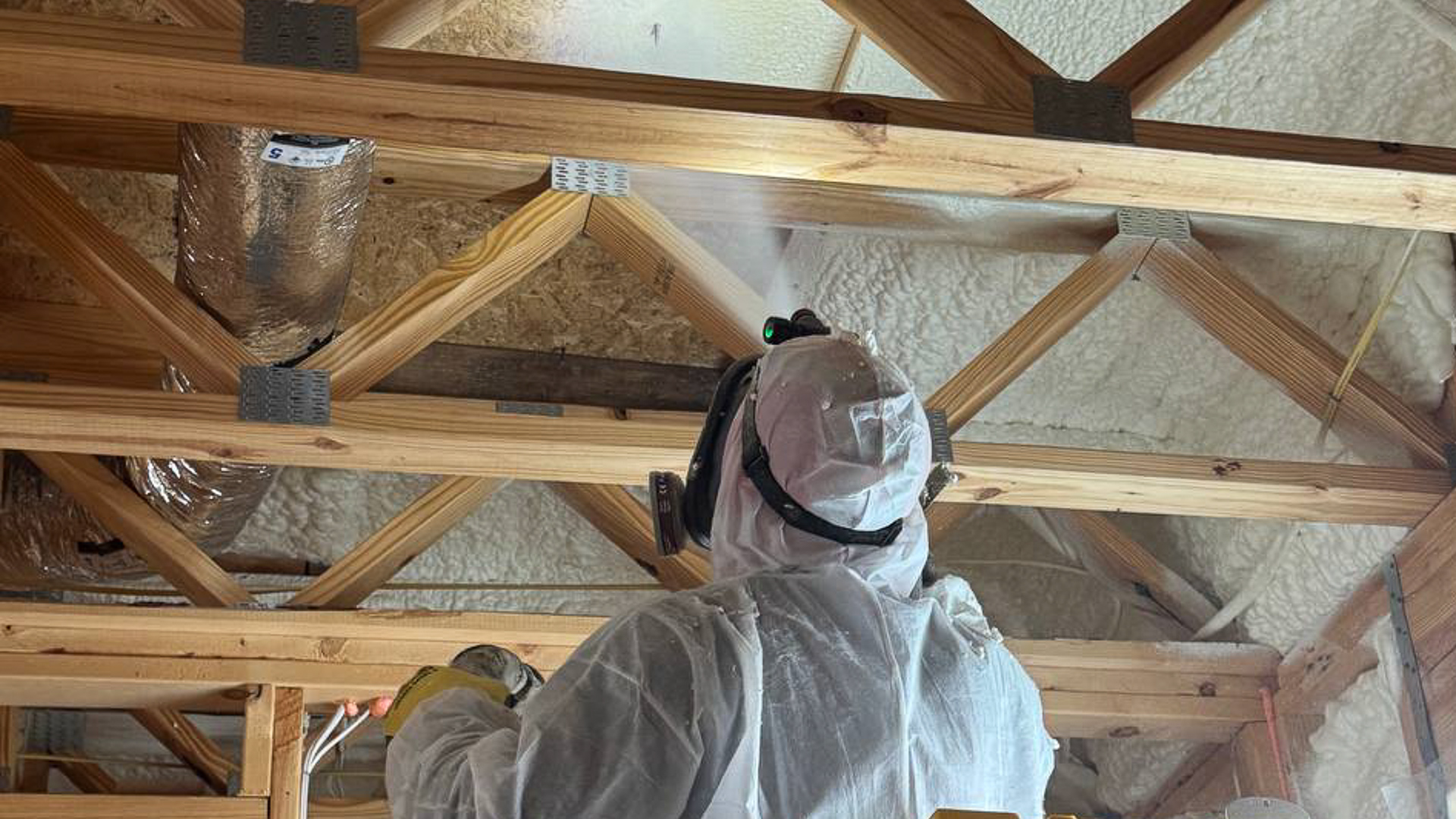
What Is Spray Foam Insulation? Everything Homeowners Need to Know
Every homeowner wants a house that feels comfortable year-round without paying unnecessarily high energy bills. Yet many people focus on upgrading air conditioners, replacing windows, or buying smart thermostats before considering one of the most important parts of an energy-efficient home: insulation.
Insulation acts as your home’s thermal envelope. When it performs well, it helps keep cooled air inside during Houston’s long, hot summers and prevents unwanted heat transfer throughout the year. When it performs poorly, your heating and cooling system has to work much harder to maintain a comfortable indoor temperature.
That’s one reason spray foam insulation has become one of the fastest-growing insulation solutions in residential and commercial construction. Unlike traditional insulation materials that simply slow heat transfer, spray foam expands to fill gaps, cracks, and hidden spaces where air can leak. This creates an insulating layer and an air barrier in a single application.
For homeowners throughout Houston, Katy, Cypress, Sugar Land, Richmond, Fulshear, Cinco Ranch, and surrounding communities, spray foam insulation offers a practical way to improve comfort, reduce energy waste, and help protect a home’s long-term value.
In this guide, you’ll learn what spray foam insulation is, how it works, the different types available, and why it has become a preferred choice for so many Texas homeowners.
⸻
What Is Spray Foam Insulation?
Spray foam insulation is a high-performance insulation material created by combining two liquid components that react when mixed through specialized application equipment.
Within seconds of being applied, the material begins expanding rapidly. Depending on the product being used, it can grow many times its original size, allowing it to reach areas that are often difficult—or impossible—for traditional insulation to cover effectively.
Once cured, the foam hardens into a durable layer that helps reduce heat transfer while significantly limiting unwanted air movement.
Unlike fiberglass batts or loose-fill insulation, spray foam doesn’t rely solely on trapping pockets of air to slow heat flow. Because it expands into small openings, it also seals many of the tiny pathways through which conditioned air escapes and outside air enters.
That combination of insulation and air sealing is what makes spray foam different from many conventional insulation products.
⸻
How Does Spray Foam Insulation Work?
To understand why spray foam is so effective, it helps to know how homes gain and lose heat.
Even in a well-built house, small gaps exist around plumbing penetrations, electrical wiring, framing connections, attic access doors, recessed lighting, ductwork, and other construction details. Individually these openings may seem insignificant, but together they can allow a surprising amount of conditioned air to escape.
During a Houston summer, your air conditioner is constantly working to cool the indoor air. Every time cool air leaks outside and hot, humid air enters the home, your HVAC system has to run longer to maintain the temperature you’ve set on the thermostat.
Spray foam insulation expands into these hidden spaces, helping reduce uncontrolled air movement. The result is a tighter building envelope that allows your heating and cooling equipment to operate more efficiently.
Many homeowners notice improvements such as:
- More even temperatures from room to room.
- Reduced drafts.
- Better humidity control.
- Less outside dust entering the home.
- A quieter indoor environment.
- Greater overall comfort.
While every home is different, reducing uncontrolled air leakage is one of the most effective ways to improve energy performance.
⸻
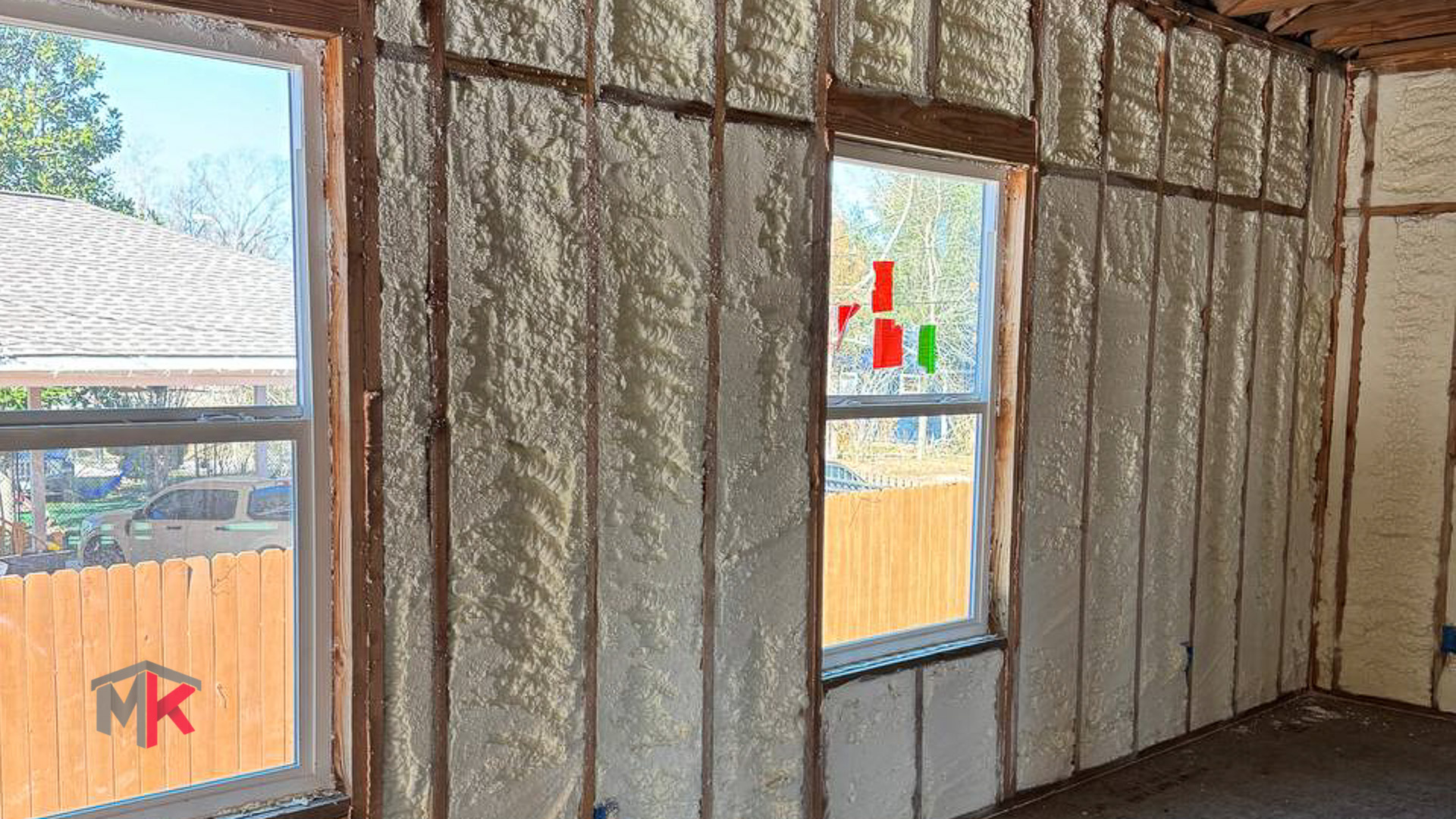
Where Can Spray Foam Insulation Be Installed?
One of spray foam’s biggest advantages is its versatility. Because it is applied as a liquid before expanding, it can conform to irregular shapes and reach spaces where traditional insulation may leave gaps.
Professional installers commonly use spray foam in:
Attics
Attics are one of the most common areas where homes lose energy. A properly insulated attic can help improve comfort throughout the house while reducing the workload on the HVAC system.
⸻
Exterior Walls
Exterior walls form the boundary between conditioned indoor spaces and outdoor temperatures. Spray foam helps improve thermal performance while reducing unwanted air infiltration.
⸻
Crawl Spaces
Many homes experience moisture and humidity issues in crawl spaces. Depending on the design of the home, spray foam can help improve insulation and contribute to better moisture management.
⸻
Garages
If your garage shares walls or ceilings with conditioned living spaces, insulating these areas may improve comfort inside adjacent rooms.
⸻
Metal Buildings
Spray foam is frequently used in workshops, warehouses, agricultural buildings, and other metal structures because it adheres well to steel surfaces and helps reduce condensation.
⸻
New Construction
Builders often choose spray foam because it can be installed before drywall is added, allowing complete access to wall cavities and roof assemblies.
⸻
Existing Homes
Homeowners don’t have to wait until they build a new house to benefit from spray foam. Many existing homes can be upgraded during remodeling projects or attic improvements.
⸻
Why More Texas Homeowners Are Choosing Spray Foam
Texas presents a unique combination of environmental conditions.
Homeowners must deal with:
- Increasing utility costs
- Long cooling seasons
- High summer temperatures
- Elevated humidity Levels
- Sudden weather changes
- Increasing utility costs
These conditions place constant demands on residential heating and cooling systems.
Many older homes were built using insulation standards that were appropriate decades ago but don’t always meet today’s expectations for comfort and efficiency.
As energy costs continue to rise, more homeowners are looking beyond simply replacing HVAC equipment. They want to improve the home’s ability to retain conditioned air in the first place.
That’s where spray foam insulation has gained popularity.
Instead of treating the symptoms of poor insulation—such as rooms that never seem to cool down—it addresses one of the underlying causes by helping reduce uncontrolled air leakage.
For many homeowners, this results in a house that feels more consistently comfortable throughout the year.
⸻
The Two Types of Spray Foam Insulation
Not all spray foam products are the same. Choosing the right type depends on factors such as the area being insulated, moisture exposure, structural requirements, and budget.
The two primary options are open-cell spray foam and closed-cell spray foam.
Although both provide excellent air-sealing performance, they have different characteristics that make each suitable for specific applications.
Open-Cell vs. Closed-Cell Spray Foam: What’s the Difference?
Although both types of spray foam insulation create an effective air seal, they are designed for different purposes. Choosing the right option depends on your home’s construction, your goals, and the area being insulated.